

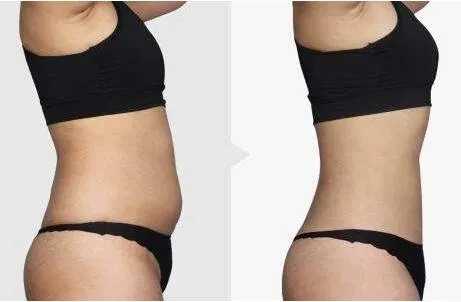
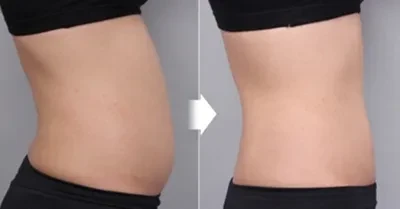
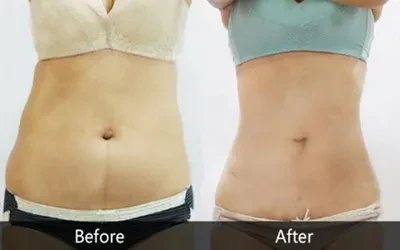
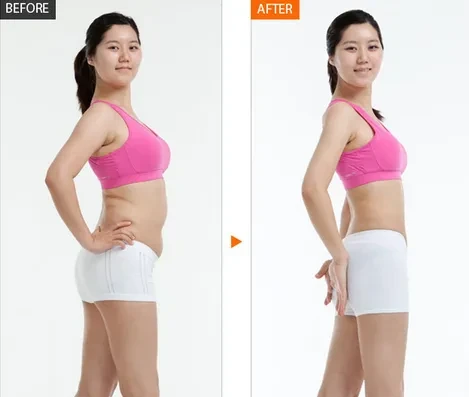
With abundant experience, Wang Jingang is a professional surgeon specializing in mini-abdominoplasty and waist reduction surgery. He is known as China’s Most Popular Anti-Aging Surgeon in Asia. Focusing on Asian anti-aging treatment, Wang Jingang has completed over 3,700 surgeries for international patients from more than 20 countries. For price consultation, contact us.
Mini Abdominal Contouring
Many people exercise regularly and control their diet, but still struggle with a loose lower abdomen or stubborn fat around the waist.
This is especially common after childbirth or significant weight loss, when the lower abdominal skin becomes loose, fat accumulates, and the waistline becomes less defined.
For these mild to moderate concerns, Mini Abdominal Contouring can be a targeted option.
Unlike a traditional full tummy tuck, it focuses on specific problem areas and typically combines:
Mini Abdominoplasty + Precise Waistline Liposuction
It involves relatively less trauma, more discreet incisions, and a shorter recovery period. It is especially suitable for people who have a good upper-abdominal foundation but have localized concerns in the lower abdomen and waist.
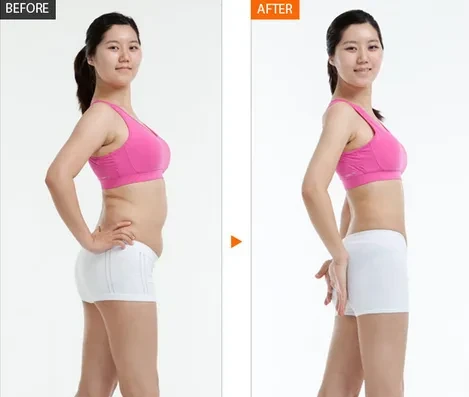
Dr. Wang Jingang's Approach
Dr. Wang Jingang has more than 20 years of experience in abdominal contouring and focuses on layered sculpting and natural waist-to-abdomen proportions.
Simply put, the goal is not just to tighten the skin or remove fat. Depending on the individual case, the skin, fat, and fascia are treated in layers.
The procedure focuses on improving:
- Loose lower-abdominal skin
- Stubborn fat
- Mild abdominal muscle separation
- Lower-abdominal bulging and contour irregularities
A very low bikini-line incision combined with tension-reducing suturing is used to keep the incision as discreet as possible.
In most cases, the belly button does not need to be repositioned, helping preserve the natural appearance of the abdomen.
It's Not Just About the Lower Abdomen
Mini abdominal contouring is not simply about flattening the lower abdomen.
After tightening the lower abdomen, the doctor may also refine the sides of the waist, waist hollows, hip area, and stubborn fat around the waist through precise liposuction.
The goal is to create a smoother transition between the lower abdomen and waist, rather than having a flatter abdomen but an undefined waistline.
The overall goal is:
A flatter lower abdomen, a more defined waist, and a smoother natural transition.
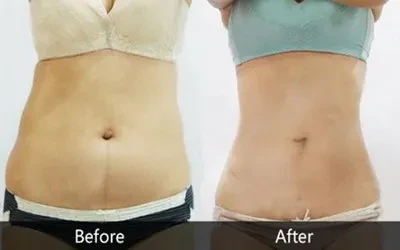
Who Is a Good Candidate?
This procedure may be suitable for people who:
- Have a relatively stable weight and no significant overall obesity
- Have good skin quality in the upper abdomen, with looseness mainly in the lower abdomen
- Have mild lower-abdominal skin laxity after childbirth or weight loss
- Have mild abdominal muscle separation or lower-abdominal bulging
- Have stubborn fat around the waist or hips that does not respond well to exercise and dieting
- Prefer a smaller procedure with more discreet scarring rather than a full tummy tuck
Who Is Not a Good Candidate?
If the entire abdomen is significantly loose, the upper abdomen is also sagging, there is severe abdominal muscle separation, or there is significant overall obesity, mini abdominal contouring may not be the right choice.
It is also generally not recommended for people who are planning to become pregnant in the near future, as another pregnancy may affect the results.
In these situations, a traditional full abdominoplasty may be more appropriate.
Mini Abdominal Contouring vs. Full Abdominoplasty
In simple terms:
Mini Abdominal Contouring:
Focuses mainly on localized concerns in the lower abdomen and waist. The incision is shorter, the belly button usually does not need to be repositioned, and recovery is generally faster.
Full Abdominoplasty:
Addresses the entire abdomen. The surgical area and incision are larger, and recovery takes longer, but it can treat more extensive abdominal skin laxity and muscle separation.
So, one option is not necessarily "better" than the other. The right procedure depends on your individual abdominal condition.
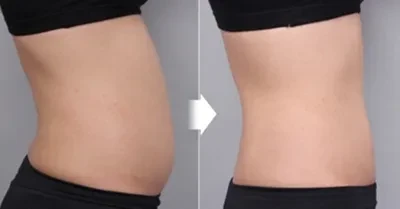
How Long Is the Recovery?
A general recovery timeline is:
First week:
Swelling is usually more noticeable. Wear the compression garment as instructed and get plenty of rest.
10–14 days:
Sutures may be removed depending on your recovery. Light work and normal daily activities can gradually resume.
3–4 weeks:
Light activities are usually fine, but avoid crunches, squats, heavy lifting, and high-intensity exercise.
Around 6 weeks:
Exercise and fitness activities can usually be resumed gradually.
Around 3 months:
Most swelling has subsided, and the waist and abdominal contours become more stable and defined.
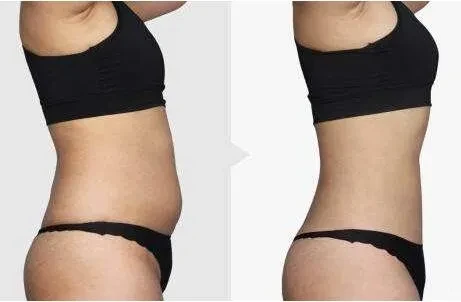
Final Reminder
Although mini abdominal contouring involves relatively less trauma, it is still a formal plastic surgery procedure, not a non-invasive cosmetic treatment.
The most important thing is to determine whether you are actually a suitable candidate.
Liposuction alone can remove fat, but it cannot correct loose skin.
Mini abdominal contouring combines, when appropriate, excess-skin removal, skin tightening, fascial tightening, and precise liposuction to address different aspects of the problem.
The goal is not simply to choose the smallest incision.
The key is choosing the right procedure for your individual anatomy and concerns.
If you are a suitable candidate, precise localized correction may be enough. If not, a more comprehensive procedure may be the better choice.
Hot Tags: mini-abdominoplasty and waist reduction surgery, China mini-abdominoplasty and waist reduction surgery surgeon, abdominal plastic surgery, abdominal reconstructive surgery, abdominal skin tightening surgery, abdominal tissue tightening surgery, abdominal wall surgical reconstruction, circumferential abdominoplasty surgery


